If you’re making this Easy Homemade Fougasse French Flatbread Recipe and aren’t prepared to fight your own kin for the crusty edges, you’re doing it wrong. Period. This isn’t some delicate tea sandwich; this is tear-and-devour material, the kind that leaves olive oil sheen on your chin and flour dust on the kitchen counter. I can still hear Uncle Vito clearing his throat dramatically, eyeing the first loaf from the oven like a hawk, ready to declare ‘family tax’ on the biggest piece. The air thick with the yeasty perfume, the clatter of forks and the low rumble of hungry bellies. It’s a primal scene, really, that smell alone could drag anyone from their hiding spot. And if you’re not pairing this robust bread with something equally substantial, like a rich, simmering Gordon Ramsay’s French Onion Soup, you’re missing out on a classic pairing you shouldn’t ignore.
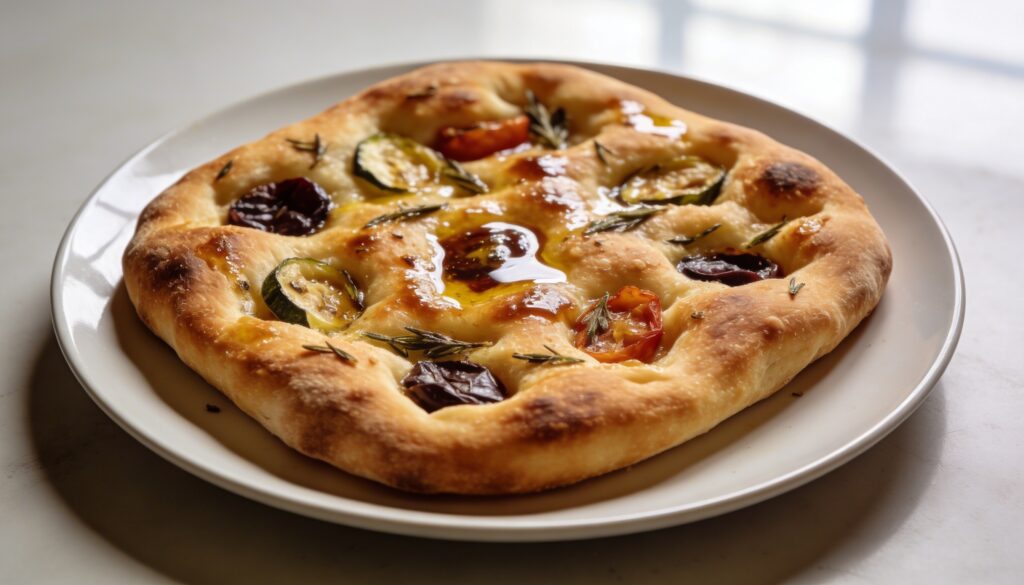
Easy Homemade Fougasse French Flatbread Recipe
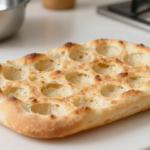
A rustic French flatbread with a crisp crust and chewy interior, made with a simple biga preferment for enhanced flavor.
Ingredients
- 1 cup (130g) bread flour, spooned & leveled
- 1/8 teaspoon instant or active-dry yeast
- 1/2 cup (120g/ml) room-temperature water (about 70F (21C))
- 1 and 1/2 cups (195g) bread flour (spooned & leveled), plus more as needed
- 1/2 cup (65g) whole wheat flour (spooned & leveled)
- 3/4 teaspoon instant or active-dry yeast
- 1 teaspoon table salt
- 1/2 cup (120g/ml) room-temperature water
- 2 Tablespoons (28g) extra-virgin olive oil, plus more as needed
- optional, for topping: flaky sea salt and herbs, such as rosemary, thyme, or Herbes de Provence
Instructions
- If using a stand mixer, knead with the dough hook on medium-low speed for 3-5 minutes, until the dough is smooth and slightly tacky. If mixing by hand, turn the dough out (all the shaggy bits!) onto a lightly floured surface and knead for 3-5 minutes, until smooth. The dough should be sticky but workable. If it's very sticky, lightly flour your hands or the dough as needed. Avoid adding too much extra flour; the dough should remain slightly tacky.
- 1st Dough Rest: Cover tightly and let the dough rest for 45 minutes, and up to 2 hours. (See make-ahead instructions if you want to extend this time.)
- 2nd Dough Rest: Cover tightly and let the dough rest for 45 minutes, and up to 2 hours.
- 3rd Dough Rest: Cover lightly and let rest for 30 minutes, and up to 2 hours.
- 4th Rest: Cover lightly and let rest for 30 minutes, and up to 1 hour. Meanwhile, preheat the oven to 450F (232C). If you have a baking stone, preheat it on the center rack. Otherwise, place a large flat baking sheet, or a rimmed baking sheet upside down, on the center rack to preheat.
- Bake the fougasse until golden brown, about 20 minutes. If you give the top of the bread a tap, it should sound hollow. For a more accurate test, the bread is done when an instant-read thermometer reads the internal temperature as 190-200F (88-93C).
- Fougasse is best the day it's baked. Store leftovers covered at room temperature for up to 2 days. If desired, reheat in a 350F (177C) oven, uncovered, for 5-8 minutes to crisp back up.
Calories: Nutrition information not provided. |
Notes
Fougasse is best the day it's baked. Store leftovers covered at room temperature for up to 2 days. Reheat in a 350F (177C) oven, uncovered, for 5-8 minutes to crisp back up.
Why This Dish Belongs on Your Family Table
Kids don’t care about your preferments or your biga; they care about ripping off a chunk of something warm and chewy, something they can dip or just eat plain. This fougasse? It disappears. Faster than you can blink. It’s got that crisp exterior, that satisfying give when you tear it, and that subtle, almost caramel-like depth from the simple overnight starter. It’s the kind of bread that needs no explanation, no fancy plating. It just sits there, beckoning, and then it’s gone. It’s the ultimate ‘no-leftovers’ guarantee, a true testament to its appeal for even the most finicky eaters and the perpetually grumpy adults alike. For this kind of foolproof deliciousness, I only trust a couple of resources for serious technique and honest results, and Serious Eats’ method is right up there. And for those times you manage to save a scrap, a little custardy French dessert can’t hurt.
The Perfect Occasion for This Recipe
Look, this Easy Homemade Fougasse French Flatbread Recipe isn’t for your fancy dinner party. This isn’t for delicate canapés or impressing the in-laws with your nouvelle cuisine skills. This is for a Tuesday night when the world’s been a bit much. For a lazy Sunday afternoon when the clouds are heavy and all you want is the warmth of the oven, the smell of good bread, and the simple act of tearing. It’s for when the kids are stomping around after a bad school day, or when you just need something honest to sop up the gravy. It’s a quiet anchor in the chaos, grounding you with its chewy texture and earthy notes from the whole wheat. A simple thing, done right, like letting your dough rest properly, a detail even the big names like Food Network know is critical for the finished texture.
Frequently Asked Questions
Q: Can I skip the biga (the preferment)?
You could, but why would you want to short-change yourself like that? It’s barely an extra step, just mixing flour, water, and yeast the night before. That little bit of foresight is what gives this fougasse its proper depth, that real ‘bread’ flavor. Don’t be lazy; it’s worth it.
Q: Do I really need bread flour and whole wheat flour?
Yeah, you do. Bread flour’s got the protein for that satisfying chewiness, that structure. And the whole wheat? That’s where your character comes from, the subtle nuttiness, the earthy grunt. Don’t skimp on the good stuff; it makes a difference.
Q: What if I don’t have fresh rosemary or herbs?
So what? Use dried. Or don’t. A good flaky sea salt and a generous drizzle of olive oil are enough. Don’t fuss over it. The bread itself is the star. Though, I do remember Cousin Sofia swearing by a sprinkle of dried oregano and a little garlic powder – said it tasted like the streets of Naples. Who am I to argue?
Q: How do I store leftovers?
Leftovers? What leftovers? If by some miracle you have a piece clinging on, wrap it tight in foil and warm it up in the oven. But honestly, this fougasse is best eaten warm, straight off the cutting board, while everyone’s still fighting for their share. That’s the point.
Conclusion
So, get in there. Make some noise. Make some mess. And don’t forget to fight for that last piece. When you’re done conquering this, maybe try your hand at something a little more delicate. Those Madeline cookies? They’re the next thing you should master.