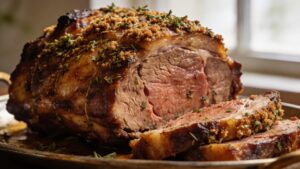
The year was 2014. Rain hammered the windows of my sister’s bungalow while fourteen relatives crowded the kitchen, arguing about stuffing recipes. I had cranked the ancient oven to 500°F to sear what I thought would be the ultimate prime rib roast, but instead filled the house with smoke and set off the alarm. The crust burned black as tar while the center stayed stubbornly raw. I cried into my apron while Uncle Dave opened every window in December. But that failure taught me everything about patience, low heat, and why you should never trust a rental oven with your dignity. If you’ve ever wondered whether beef deserves the same reverence we give holiday traditions, check out Is Brisket Healthy? 7 Surprising Benefits for a deeper dive into what these cuts can offer your table. This recipe is my redemption arc—no alarms, no tears, just meat that behaves.
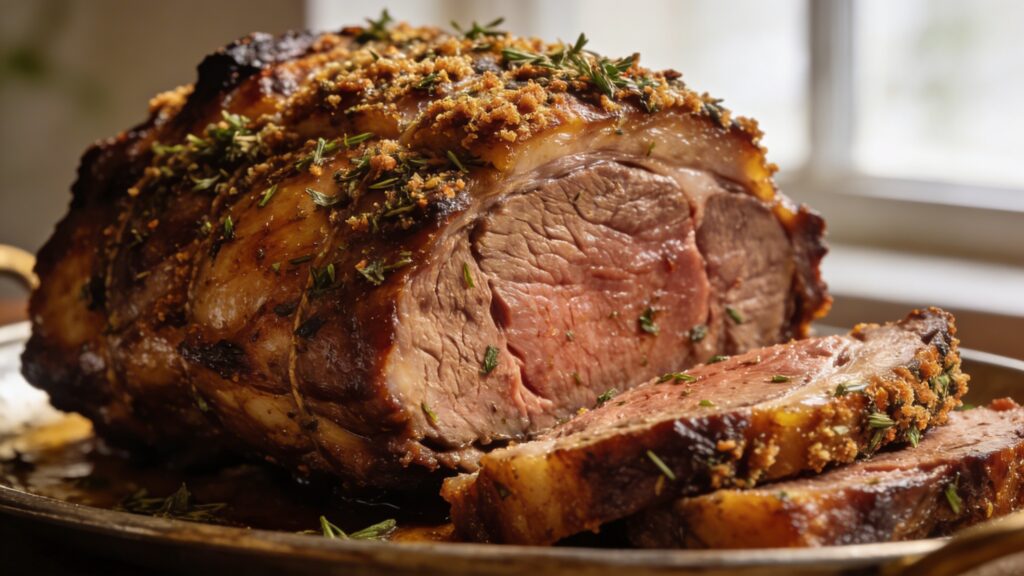
Restaurant-Quality Prime Rib Roast at Home
April 27 is National Prime Rib Day — the occasion to serve the king of roasts at your own table. The reverse sear method produces edge-to-edge perfect medium-rare with a crackling herb crust. This is the roast dinner your family will talk about until next April.
Ingredients
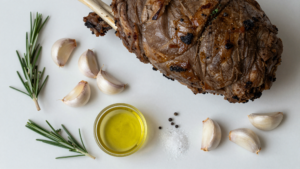
- 1 (8-10 lb) prime rib roast, bone-in or boneless
- 4 cloves garlic, minced
- 2 tablespoons fresh rosemary, chopped
- 2 tablespoons fresh thyme, chopped
- 3 tablespoons olive oil
- 1 tablespoon kosher salt
- 2 teaspoons black pepper
Instructions
- 1. Remove the prime rib from the refrigerator and let it sit at room temperature for 2 hours.
- 2. Preheat the oven to 250°F (120°C).
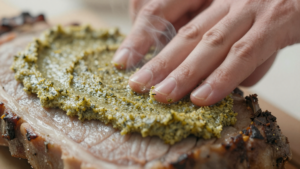
- 3. In a small bowl, mix minced garlic, chopped rosemary, chopped thyme, olive oil, salt, and pepper into a paste.
- 4. Pat the roast dry with paper towels, then rub the herb paste all over the surface.
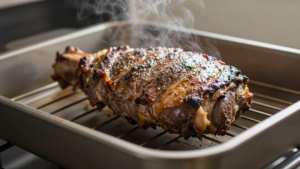
- 5. Place the roast on a wire rack in a roasting pan, bone-side down if applicable.
- 6. Insert a meat thermometer into the thickest part, avoiding bone.
- 7. Roast in the oven until internal temperature reaches 120°F (49°C) for medium-rare, about 3-4 hours.
- 8. Remove from oven and let rest for 30 minutes. Increase oven temperature to 500°F (260°C).
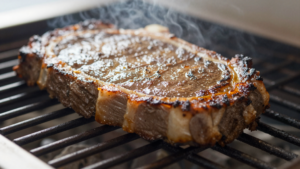
- 9. Place the rested roast back in the hot oven for 2-3 minutes per side to sear and form a crust.
- 10. Let rest for 10 minutes, then slice against the grain and serve.
Details
Reverse sear method ensures edge-to-edge perfect medium-rare with a crackling herb crust.
Nutrition Facts (per serving)
| Calories | 750 kcal |
| Protein | 60 g |
| Carbs | 1 g |
| Fat | 55 g |
Notes
Use a meat thermometer for accuracy. Resting is crucial for juicy meat. Adjust cooking time based on roast size.
Why This Dish Belongs on Your Holiday Table
Here’s the truth about hosting: you need a main dish that forgives you. This prime rib sits—resting on your counter like a sleeping giant—for a solid hour after cooking, buying you time to wrangle kids, fix broken gravy, or hide in the bathroom for five minutes of silence. The garlic and rosemary crust isn’t just for show; those herbs create a barrier that locks in juices while your guests finish their third round of drinks. Unlike fussy fish or poultry that turns to cardboard if you blink, beef ribeye forgives. It feeds eight to ten hungry adults without breaking your back, and the bones (if you keep them) make the kind of stock that redeems Monday night’s dinner. If you’re feeding a crowd that appreciates comfort food with ambition, my Cheesy Beef Bowtie Pasta handles the weeknight chaos, but this roast? This is architecture. The tradition of British Roast beef teaches us that some meals are built to sustain armies, not just families. Your oven does the heavy lifting while you delegate the sides to relatives who can’t be trusted with meat.
The Perfect Occasion for This Recipe
Serve this when you want to look like a hero without actually working like one. I’m talking about the Sunday after Christmas, when the house is littered with torn wrapping paper and everyone’s wearing pajamas at 4 PM. Or that April afternoon when spring rain keeps drumming the roof and you realize—suddenly, violently—that you need something substantial to celebrate surviving winter. It’s for the “we said we’d host but nobody wants to dress up” dinner party, where guests arrive in slippers and you pour red wine into tumblers because the good glasses are still in the dishwasher. The reverse sear method, which J. Kenji López-Alt details beautifully in his Reverse Sear Prime Rib Recipe, was practically invented for these lazy-glorious afternoons. You start the meat early, ignore it for hours, then blast it at the end for ten minutes of theatrical sizzling. Your kitchen smells like a steakhouse. Your effort level stays suspiciously low.
Frequently Asked Questions
Can I use a boneless roast instead of bone-in?
Yes, but you’re leaving flavor on the table. The bones act as insulation—without them, watch your timing like a hawk because that center cooks faster than you think.
My oven runs hot. Should I adjust?
Hot ovens ruin prime rib. Buy a $15 oven thermometer and trust it more than your dial. Most home ovens lie by 25 degrees, and that’s the difference between pink and gray meat.
Do I really have to rest it for an hour?
Non-negotiable. Cut too early and you’ll watch $80 worth of beef bleed all over your cutting board. The meat needs to reabsorb its juices, and frankly, so do you.
What if I only have dried herbs?
Double the amount, but crush them between your palms first to wake them up. Fresh is better—dried rosemary can taste like pine needles if you’re heavy-handed.
Conclusion
Don’t overthink this. Buy the best meat you can afford, salt it aggressively, and let the oven do its job without your anxiety interfering. If the crust looks too dark or the center too pink, serve it anyway—people remember hospitality, not thermometer readings. Slice thick. Pour the jus. Let someone else wash the dishes. And for the love of all that is holy, do not serve this beast without proper mashed potatoes. My go-to is 7 Incredible Gordon Ramsay Mashed Potatoes—they’re rich enough to make you forget about the gravy if you accidentally scorch it. You have the tools. You have the meat. Now go make April 27th taste expensive.