The year was 2016, and my oven decided to die three hours before the first Seder. I’m talking full mechanical surrender—right there in my cramped Brooklyn kitchen, with seventeen relatives due to arrive and a counter covered in eggs that wouldn’t whisk themselves. That’s when my neighbor shoved a tin of Passover coconut macaroons into my hands—sticky, golden, and somehow still warm from her ancient toaster oven. I had originally planned to attempt some 7 Delicious Madeline Cookies Recipe Using Cream that afternoon, but fate intervened. They disappeared in four minutes flat. No one asked about the missing madeleines. They just asked for the recipe. That was the moment I stopped overthinking holiday desserts. Sometimes four ingredients and a prayer beat a French technique any day.
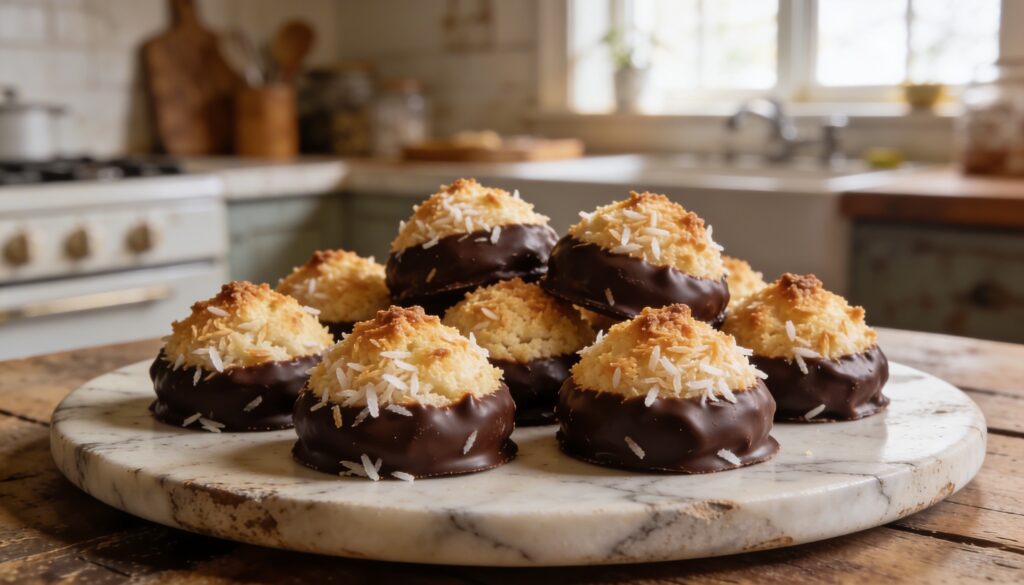
Passover Coconut Macaroons 4-Ingredient Recipe
Chewy, golden coconut macaroons dipped in dark chocolate — made with just four ingredients and naturally gluten-free for Passover. The most iconic Passover cookie that non-Jewish friends always ask to take home, regardless of the holiday.
Ingredients
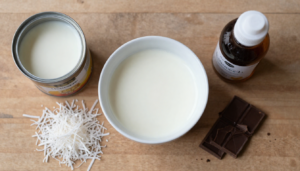
- 3 cups shredded sweetened coconut
- 1 can (14 ounces) sweetened condensed milk
- 2 large egg whites
- 1 teaspoon vanilla extract
- 4 ounces dark chocolate, chopped
Instructions
- 1. Preheat oven to 325°F (165°C). Line a baking sheet with parchment paper.
- 2. In a large bowl, combine shredded coconut, sweetened condensed milk, egg whites, and vanilla extract. Mix until well combined.
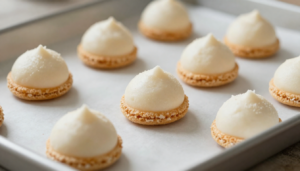
- 3. Using a cookie scoop or tablespoon, drop mounds of the coconut mixture onto the prepared baking sheet, spacing about 2 inches apart.
- 4. Bake for 20-25 minutes, or until golden brown on the edges.
- 5. Remove from oven and let cool completely on the baking sheet.
- 6. Melt the dark chocolate in a microwave-safe bowl or over a double boiler until smooth.
- 7. Dip the bottom of each cooled macaroon into the melted chocolate, then place on a wire rack to set.
- 8. Allow chocolate to set before serving.


Details
Chewy, golden coconut macaroons dipped in dark chocolate, made with simple ingredients for a classic holiday treat.
Nutrition Facts (per serving)
| Calories | 120 kcal |
| Protein | 2 g |
| Carbs | 15 g |
| Fat | 7 g |
Notes
Naturally gluten-free and perfect for Passover. Store in an airtight container for up to a week.
Why This Dish Belongs on Your Holiday Table
Here’s the unvarnished truth about hosting during Passover: your guests are hungry, the dietary restrictions are real, and nobody wants another dry cake that tastes like cardboard penance. These macaroons solve the problem without asking you to perform kitchen gymnastics. The sweetened condensed milk does the heavy lifting—binding the coconut into chewy, golden domes that stay moist for days, not hours. You can bake them Tuesday and serve them Saturday without losing that fresh-from-the-oven snap. If you’re looking for other chocolate-forward options that won’t betray your gluten-free guests, check out these 7 Incredible Healthier Chocolate Cookies. And for a deeper dive into why we eat what we eat during this particular week, Passover Foods and Customs over at My Jewish Learning breaks down the tradition better than I can. The point is—this isn’t fancy. It’s functional. And that’s exactly what you need when you’re feeding twelve people on a Tuesday night.
The Perfect Occasion for This Recipe
Make these when your Catholic neighbor drops by on Good Friday and you need something to serve with coffee that doesn’t require explaining the entire Haggadah. Or bake them at 11 PM on a Tuesday because you just realized the Seder is tomorrow and the only thing in your pantry is a bag of coconut and some chocolate from Hanukkah. They’re the ideal ‘I forgot to plan dessert’ salvation—unfussy enough for a casual kitchen chat, substantial enough to end a formal meal. The history of these little mounds is actually fascinating; according to Macaroon on Wikipedia, they’ve been around since the 9th century, which means your great-great-grandmother probably pulled this same last-minute move. Serve them when people are tired of heavy meals but still want something sweet. Serve them when the kids are finally in bed and you want to dip something in chocolate without making a production. Just serve them.
Frequently Asked Questions
Can I use unsweetened coconut?
You can, but don’t. The sweetened stuff is what gives you that chewy, sticky interior that defines a proper macaroon. Unsweetened makes them dry and sad—like chewing on a hay bale.
My macaroons spread into a puddle. What happened?
Your egg whites weren’t stiff enough. I learned this the hard way in 2014 when I tried to rush the whisking and ended up with coconut pancakes. Beat them until they hold a peak that doesn’t flop over when you lift the whisk.
Do I really need to dip them in chocolate?
No, but why wouldn’t you? The bitterness cuts the sweetness. If you’re skipping the chocolate, at least toast the coconut first so they don’t taste like candy from a hospital waiting room.
How long do these actually last?
Five days in an airtight container, and they get better on day two. The flavors meld. The texture settles. It’s science.
Conclusion
That’s it. Four ingredients, one bowl, and zero excuses for showing up to Passover empty-handed. You don’t need a stand mixer or a culinary degree—just a willingness to get your hands sticky and maybe burn a batch or two while you figure out your oven’s hot spots. If you’re looking for another project that uses egg whites (since you’ll have yolks left over), try these 7 Healthy Marshmallows Recipes. Now stop reading and start baking. Your future self—staring at an empty platter at the end of the night—will thank you.